
What Is a Smart Thermostat? How It Works, Benefits & Cost
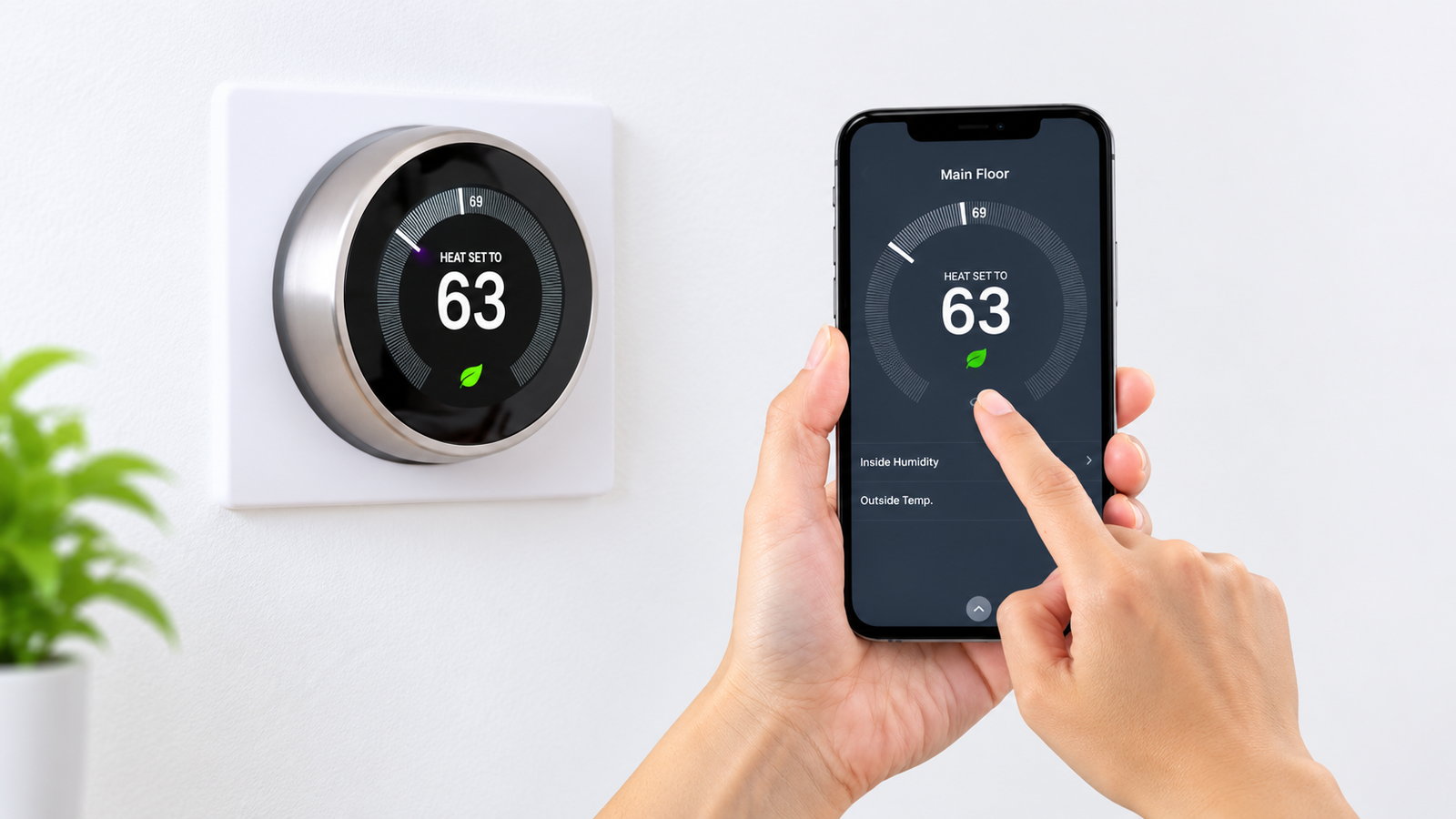
What is a smart thermostat? It is a Wi-Fi-connected device that controls your home’s heating and cooling and lets you change the temperature from a phone app. Most models also offer schedules, occupancy detection, and energy reports, though features and savings depend on your HVAC system, your routine, and the model you pick.
What Is a Smart Thermostat?
A smart thermostat is a digital temperature controller that joins your home network and talks to compatible HVAC (heating, ventilation, and air conditioning) equipment.
A manual thermostat needs you to change settings by hand. A programmable thermostat follows a fixed weekly schedule. A connected model goes further: you can adjust it remotely, edit schedules in an app, and, on some models, let it adapt automatically.
Depending on the product, you can:
- Change the temperature from your phone.
- Build heating and cooling schedules.
- Lower settings automatically when nobody is home.
- Track temperature and equipment run time.
- Link it with voice assistants and smart home platforms.
- Receive filter reminders and energy reports.
Not every model includes every feature, so read the manufacturer’s specification sheet before buying.
How Does a Smart Thermostat Work?
The device measures indoor temperature, compares it with your target, and signals your HVAC equipment to start or stop heating or cooling. Wi-Fi and software features sit on top of that basic loop.
Sensors measure conditions
Built-in sensors read the temperature near the unit. Some models also track humidity or accept extra room sensors, which helps in homes with hot and cold spots.
Wi-Fi enables remote control
Once on your network, the thermostat syncs with a mobile app. You could lower the heat from the office or cool the house before you arrive. Remote access needs a working internet connection. Schedules automate changes
You can set different temperatures for morning, daytime, evening, and night. A common approach is a comfortable setting while you are home and a more energy-conscious one while you are away. The best schedule depends on your climate and comfort needs.
Occupancy and learning features adapt settings
Some models use motion sensors, phone location, or learning algorithms to detect when the house is empty and adjust accordingly. These features need the right app permissions and, sometimes, extra sensors.
Reports show usage patterns
Energy reports reveal when your system runs and how long. Those patterns can point to schedule changes that cut unnecessary use.
What Are the Benefits of a Smart Thermostat?
The main benefits are convenience, control, and a chance at lower energy use.
Remote control
If plans change, you can fix the temperature from your phone instead of heating or cooling an empty house.
Possible energy savings
Heating and cooling make up a large share of household energy use, so reducing waste there matters. ENERGY STAR says certified smart thermostats are independently evaluated for energy-saving performance. Even so, results vary with home, climate, equipment, and behavior. A smart thermostat cannot fix an inefficient HVAC system or guarantee a lower bill.
Routine-based comfort
Schedules suit households with predictable work hours, school runs, or sleep patterns, so you stop adjusting the dial all day.
Smart home integration
Many models work with voice assistants and automation routines. Supported platforms differ by product, so verify yours before purchasing.
Insights and reminders
Some models show temperature history, run-time data, and prompts to check or replace filters. These reminders help, but they do not replace regular maintenance or professional inspections.
Smart vs. Programmable vs. Manual Thermostat
| Feature | Smart | Programmable | Manual |
|---|---|---|---|
| Manual temperature control | Yes | Yes | Yes |
| Scheduled settings | Usually | Usually | Usually not |
| Wi-Fi and phone control | Common | Not usually | No |
| Learning or occupancy features | Selected models | Rare | No |
| Energy reports | Selected models | Limited | No |
| Typical upfront cost | Higher | Moderate | Lower |
Choose a smart model if you want connected control and automation. A programmable one is enough if you only need a dependable schedule, and a manual one suits people who prefer simple controls.
What Are the Disadvantages of a Smart Thermostat?
Higher cost
Connected models usually cost more than basic ones. Room sensors, accessories, and professional installation add to the total.
HVAC compatibility
Compatibility depends on system type, wiring, and voltage. Multi-stage systems, heat pumps, and some specialized equipment may need specific models or add-ons. Use the manufacturer’s compatibility checker before buying.
C-wire requirements
Many smart thermostats need a common wire (C-wire) for continuous power. Some include adapters or alternative power options instead. If you are unsure what is behind your current thermostat, ask a qualified HVAC technician rather than experimenting with electrical connections.
Internet and app dependence
Remote access and cloud features stop working during an internet outage. Depending on the model, basic local temperature control may continue.
Privacy considerations
Some devices collect settings, usage patterns, or occupancy data. Review the privacy policy, app permissions, account security options, and data-sharing settings before setup.
Does a Smart Thermostat Save Money?
It can, but the amount varies. Your savings depend on:
- How often your HVAC system runs.
- How long your home sits empty.
- Your current thermostat habits.
- Local weather and energy prices.
- The efficiency of your equipment.
- Whether you actually use scheduling and automation.
A household that leaves the air conditioning running in an empty home may see a clear benefit from scheduling. A household that already follows an efficient routine will likely save less. To judge the upgrade, compare the purchase and installation cost with your realistic energy savings, and treat advertised savings figures as best-case estimates rather than promises.
How to Choose the Right Smart Thermostat
Identify your HVAC type.
Note whether you have central air, a heat pump, a furnace, or another setup, then check the maker’s compatibility guide.
- Check wiring and power.
Look for C-wire requirements and supported configurations. Hire a technician if you cannot identify your wires with confidence. - Pick features you will use.
Remote access and scheduling cover many homes. Pay extra for learning, occupancy sensing, or room sensors only if they solve a real problem. - Confirm smart home support.
Verify that the model works with your specific voice assistant or platform. - Review security and updates.
Favor clear privacy policies, regular software updates, strong account protection, and a reputable manufacturer. - Calculate total cost. Add the device price, installation, accessories, and any subscription fees. The best choice is the one that fits your equipment, budget, and routine, not necessarily the priciest.
Is a Smart Thermostat Worth It?
It is a good fit if you value remote control, flexible schedules, smart home integration, or better insight into how your system runs. It is less compelling if you rarely change the temperature, already follow an efficient schedule, or have no use for connected features. If efficiency is your priority, look for ENERGY STAR certification where available.
FAQs
What is a smart thermostat used for?
It controls a compatible home’s heating and cooling and adds smartphone access, scheduling, automation, and energy reports.
How does a smart thermostat know the temperature?
Built-in sensors measure the air around the unit. Some models also use separate room sensors.
Does a smart thermostat need Wi-Fi?
Wi-Fi is needed for remote access and online features. Basic operation may continue without internet, depending on the model.
Can a smart thermostat work without a C-wire?
Some can, using an approved adapter or alternative power method. Requirements vary, so check the manufacturer’s guidance.
Can I install a smart thermostat myself?
Some models are built for DIY installation. Because wiring and compatibility differ, get professional help if you are unsure.
Does a smart thermostat work with every air conditioner?
No. Compatibility depends on the thermostat, wiring, and cooling system, so check before purchasing.
Is a smart thermostat better than a programmable one?
It offers remote access and, on selected models, automation. A programmable thermostat may be enough if you only need scheduled changes.
What happens during a power outage?
The thermostat and HVAC equipment may stop working. Behavior after power returns depends on the model and system, and some devices reconnect automatically.
Final Verdict
A smart thermostat makes temperature control more convenient and may reduce wasted energy. Weigh compatibility, installation cost, privacy, and realistic savings before you buy, confirm your HVAC requirements, and choose the model that matches your household’s needs.





One Comment